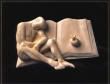
I hold my honey and I store my bread
In little jars and cabinets of my will.
I label clearly, and each latch and lid
I bid, Be firm till I return from hell.
I am very hungry. I am incomplete.
And none can tell when I may dine again.
No man can give me any word but Wait,
The puny light. I keep eyes pointed in;
Hoping that, when the devil days of my hurt
Drag out to their last dregs and I resume
On such legs as are left me, in such heart
As I can manage, remember to go home,
My taste will not have turned insensitive
To honey and bread old purity could love.
~ Gwendolyn Brooks
11 January 2010

Highlights

We recently lost Kenneth Noland (beginning of this month). Great time to look back on the oeuvre of this contemporary artist. I think I explained earlier how I took a date -- or vice versa, to see a Miró show (my first contemporary art show) and I spent the entire evening being insulted by the artist's depiction of women. My date insisted I keep a sense of humour about the whole thing, but that was too much. Once I got home, I did what any respectable nerd would do avowed to research this artist. This led to research on other contemporary artists, and now I understand the mischievousness and tongue-in-cheekness, that are part of the sardonic humour these artists often use in their art. If you get a visceral reaction, it may be because they're offending your sensibilities.
I think that Noland was often misunderstood (and I speak as a neophyte only) and, at times, not given as much respect as other contemporary artists.
So what do you see? A broken circle? A broken wheel? Maybe that's what it is...
07 September 2007
I know why the caged bird sings

A free bird leaps on the back
Of the wind and floats downstream
Till the current ends and dips his wing
In the orange suns rays
And dares to claim the sky.
But a BIRD that stalks down his narrow cage
Can seldom see through his bars of rage
His wings are clipped and his feet are tied
So he opens his throat to sing.
The caged bird sings with a fearful trill
Of things unknown but longed for still
And his tune is heard on the distant hill for
The caged bird sings of freedom.
The free bird thinks of another breeze
And the trade winds soft through
The sighing trees
And the fat worms waiting on a dawn-bright
Lawn and he names the sky his own.
But a caged BIRD stands on the grave of dreams
His shadow shouts on a nightmare scream
His wings are clipped and his feet are tied
So he opens his throat to sing.
The caged bird sings with
A fearful trill of things unknown
But longed for still and his
Tune is heard on the distant hill
For the caged bird sings of freedom.
by Maya Angelou
05 July 2007
AFRAID? Of whom am I afraid?

AFRAID? Of whom am I afraid?
Not death; for who is he?
The porter of my father’s lodge
As much abasheth me.
Of life? ‘T were odd I fear a thing
That comprehendeth me
In one or more existences
At Deity’s decree.
Of resurrection? Is the east
Afraid to trust the morn
With her fastidious forehead?
As soon impeach my crown!
-- Emily Dickinson
25 December 2006
Three Poems On Wine

I
Among the flowers a drink of wine.
I sit alone without a friend.
So I invite the moon,
Then see my shadow, make us three.
The moon can’t know how to drink,
Since just my shadow drinks with me.
The moon brought shadow along
To keep me silent company.
Joy should reflect the season.
I sing. That makes the Moon reel.
Get up. Make my shadow sway.
While I’m here let’s celebrate.
When I’m drunk each seek the Way,
Tie ourselves to Eternal Journeys,
Swear to meet again in the Milky Way.
II
If the heavens were not in love with wine,
There’d be no Wine Star in the sky.
And if earth wasn’t always drinking,
There’d be nowhere called Wine Spring.
I’ve heard that pure wine makes the Sage.
Even the cloudy makes us wise.
If even the wise get there through drink,
What’s the point of True Religions?
Three times and I understand the Way,
Six and I’m one again with Nature.
Only the things we know when we’re drunk
Can never be expressed when we’re sober.
III
Third month in Ch’ang-an city,
Knee-deep in a thousand fallen flowers.
Alone in Spring who can stand this sadness?
Or sober see transient things like these?
Long life or short, rich or poor,
Our destiny’s determined by the world.
But drinking makes us one with life and death,
The Myriad Things we can barely fathom.
Drunk, Heaven and Earth are gone.
Stilled, I clutch my lonely pillow.
Forgetting that the Self exists,
That is the mind’s greatest joy.

A Song for New Year's Eve
Stay yet, my friends, a moment stay—
Stay till the good old year,
So long companion of our way,
Shakes hands, and leaves us here.
Oh stay, oh stay,
One little hour, and then away.
The year, whose hopes were high and strong,
Has now no hopes to wake;
Yet one hour more of jest and song
For his familiar sake.
Oh stay, oh stay,
One mirthful hour, and then away.
The kindly year, his liberal hands
Have lavished all his store.
And shall we turn from where he stands,
Because he gives no more?
Oh stay, oh stay,
One grateful hour, and then away.
Days brightly came and calmly went,
While yet he was our guest;
How cheerfully the week was spent!
How sweet the seventh day's rest!
Oh stay, oh stay,
One golden hour, and then away.
Dear friends were with us, some who sleep
Beneath the coffin-lid:
What pleasant memories we keep
Of all they said and did!
Oh stay, oh stay,
One tender hour, and then away.
Even while we sing, he smiles his last,
And leaves our sphere behind.
The good old year is with the past;
Oh be the new as kind!
Oh stay, oh stay,
One parting strain, and then away.
-- William Cullen Bryant
25 September 2006

The Love Song of J. Alfred Prufrock
S'io credesse che mia risposta fosse
A persona che mai tornasse al mondo,
Questa fiamma staria senza piu scosse.
Ma perciocche giammai di questo fondo
Non torno vivo alcun, s'i'odo il vero,
Senza tema d'infamia ti rispondo.
Let us go then, you and I,
When the evening is spread out against the sky
Like a patient etherized upon a table;
Let us go, through certain half-deserted streets,
The muttering retreats
Of restless nights in one-night cheap hotels
And sawdust restaurants with oyster-shells:
Streets that follow like a tedious argument
Of insidious intent
To lead you to an overwhelming question . . .
Oh, do not ask, "What is it?"
Let us go and make our visit.
In the room the women come and go
Talking of Michelangelo.
The yellow fog that rubs its back upon the window-panes,
The yellow smoke that rubs its muzzle on the window-panes
Licked its tongue into the corners of the evening,
Lingered upon the pools that stand in drains,
Let fall upon its back the soot that falls from chimneys,
Slipped by the terrace, made a sudden leap,
And seeing that it was a soft October night,
Curled once about the house, and fell asleep.
And indeed there will be time
For the yellow smoke that slides along the street,
Rubbing its back upon the window-panes;
There will be time, there will be time
To prepare a face to meet the faces that you meet;
There will be time to murder and create,
And time for all the works and days of hands
That lift and drop a question on your plate;
Time for you and time for me,
And time yet for a hundred indecisions,
And for a hundred visions and revisions,
Before the taking of a toast and tea.
In the room the women come and go
Talking of Michelangelo.
And indeed there will be time
To wonder, "Do I dare?" and, "Do I dare?"
Time to turn back and descend the stair,
With a bald spot in the middle of my hair--
[They will say: "How his hair is growing thin!"]
My morning coat, my collar mounting firmly to the chin,
My necktie rich and modest, but asserted by a simple pin--
[They will say: "But how his arms and legs are thin!"]
Do I dare
Disturb the universe?
In a minute there is time
For decisions and revisions which a minute will reverse.
For I have known them all already, known them all:--
Have known the evenings, mornings, afternoons,
I have measured out my life with coffee spoons;
I know the voices dying with a dying fall
Beneath the music from a farther room.
So how should I presume?
And I have known the eyes already, known them all--
The eyes that fix you in a formulated phrase,
And when I am formulated, sprawling on a pin,
When I am pinned and wriggling on the wall,
Then how should I begin
To spit out all the butt-ends of my days and ways?
And how should I presume?
And I have known the arms already, known them all--
Arms that are braceleted and white and bare
[But in the lamplight, downed with light brown hair!]
Is it perfume from a dress
That makes me so digress?
Arms that lie along a table, or wrap about a shawl.
And should I then presume?
And how should I begin?
. . . . .
Shall I say, I have gone at dusk through narrow streets
And watched the smoke that rises from the pipes
Of lonely men in shirt-sleeves, leaning out of windows? . . .
I should have been a pair of ragged claws
Scuttling across the floors of silent seas.
. . . . .
And the afternoon, the evening, sleeps so peacefully!
Smoothed by long fingers,
Asleep . . . tired . . . or it malingers,
Stretched on the floor, here beside you and me.
Should I, after tea and cakes and ices,
Have the strength to force the moment to its crisis?
But though I have wept and fasted, wept and prayed,
Though I have seen my head [grown slightly bald] brought in upon a platter,
I am no prophet--and here's no great matter;
I have seen the moment of my greatness flicker,
And I have seen the eternal Footman hold my coat, and snicker,
And in short, I was afraid.
And would it have been worth it, after all,
After the cups, the marmalade, the tea,
Among the porcelain, among some talk of you and me,
Would it have been worth while,
To have bitten off the matter with a smile,
To have squeezed the universe into a ball
To roll it toward some overwhelming question,
To say: "I am Lazarus, come from the dead
Come back to tell you all, I shall tell you all"--
If one, settling a pillow by her head,
Should say: "That is not what I meant at all.
That is not it, at all."
And would it have been worth it, after all,
Would it have been worth while,
After the sunsets and the dooryards and the sprinkled streets,
After the novels, after the teacups, after the skirts that trail along the
floor--
And this, and so much more?--
It is impossible to say just what I mean!
But as if a magic lantern threw the nerves in patterns on a screen:
Would it have been worth while
If one, settling a pillow or throwing off a shawl,
And turning toward the window, should say:
"That is not it at all,
That is not what I meant, at all."
. . . . .
No! I am not Prince Hamlet, nor was meant to be;
Am an attendant lord, one that will do
To swell a progress, start a scene or two,
Advise the prince; no doubt, an easy tool,
Deferential, glad to be of use,
Politic, cautious, and meticulous;
Full of high sentence, but a bit obtuse
At times, indeed, almost ridiculous--
Almost, at times, the Fool.
I grow old . . .I grow old . . .
I shall wear the bottoms of my trousers rolled.
Shall I part my hair behind? Do I dare to eat a peach?
I shall wear white flannel trousers, and walk upon the beach.
I have heard the mermaids singing, each to each.
I do not think that they will sing to me.
I have seen them riding seaward on the waves
Combing the white hair of the waves blown back
When the wind blows the water white and black.
We have lingered in the chambers of the sea
By sea-girls wreathed with seaweed red and brown
Till human voices wake us, and we drown.
T.S. Eliot
06 July 2006
Old Recycled Post... Never Posted...
It's almost over. I say almost because there are still little remnants. Things to clear up, clean up.
It's time to move on to a different phase. The rush and hectic lifestyle of before has decidedly ended, yet I cannot find inside me the will to change my view.
Not that I do not want to, just that I'm not sure how I will proceed. It's not that I don't want to move on, it's just that I'm not sure I've got the tools to do so.
I just read something recently about agonizing over the written word and how such writers should probably release their readers from reading such drivel!
But sometimes it seems that until you start complaining there isn't real stuff coming out.
How strange. Writing a draft and working over it is the best way to finally see how the process goes.
Yet for me, writing for writing's sake is not only difficult, but necessary. It helps me release pent up frustration, anger and other negative feelings hindering my growth. Still, I don't always find the time to do so. If it is so critical, why won't I make myself sit for one hour every day, at the same time, at the same place and pour out whatever comes out of my mind?
When I skip the writing, something strange happens. I get almost the same feeling as when I skip my run... I become restless, absent-minded, grumpy. But even more, I become insecure.
I mean... insecure? What's that got to do with writing?
Well, if I use it as a release, then it means that it probably helps me balance everything just so. Without that balance, my chi is then all wrong.
I can't find any poem that relates to how I feel.
30 May 2006
Five Women Bathing in Moonlight

When night believes itself alone
It is most natural, conceals
No artifice. The open moon
With webs in sky and water wields
The slightest wave. This vision yields
To one sole theme of semblance, land
Leasing each wave the palest peals
Of bright apparent notes of sand.
The bathers whitely come and stand.
Water diffuses them, their hair
Like seaweed slurs the shoulders, and
Their voices in the moonstrung air
Go plucked of words. Now wading where
The moon's misprisions salve them in-
To silver, they are unaware
How lost they are when they begin
To mix with water, making then
Gestures of blithe obedience,
As five Danilovas within
The soft compulsions of their dance.
- Richard Wilbur
19 May 2006
Eros & Psyche
 Sonnet 105
Let not my love be called idolatry,
Nor my beloved as an idol show,
Since all alike my songs and praises be
To one, of one, still such, and ever so.
Kind is my love to-day, to-morrow kind,
Still constant in a wondrous excellence;
Therefore my verse to constancy confined,
One thing expressing, leaves out difference.
Fair, kind, and true, is all my argument,
Fair, kind, and true, varying to other words;
And in this change is my invention spent,
Three themes in one, which wondrous scope affords.
Fair, kind, and true, have often lived alone,
Which three till now, never kept seat in one.
Sex Without Love
How do they do it, the ones who make love
without love? Beautiful as dancers,
gliding over each other like ice-skaters
over the ice, fingers hooked
inside each other's bodies, faces
red as steak, wine, wet as the
children at birth whose mothers are going to
give them away. How do they come to the
come to the come to the God come to the
still waters, and not love
the one who came there with them, light
rising slowly as steam off their joined
skin? These are the true religious,
the purists, the pros, the ones who will not
accept a false Messiah, love the
priest instead of the God. They do not
mistake the lover for their own pleasure,
they are like great runners: they know they are alone
with the road surface, the cold, the wind,
the fit of their shoes, their over-all cardio-
vascular health--just factors, like the partner
in the bed, and not the truth, which is the
single body alone in the universe
against its own best time.
Sharon Olds
Success - Bessie Stanley
He has achieved success
who has lived well,
laughed often, and loved much;
who has enjoyed the trust of pure women,
the respect of intelligent men
and the love of little children;
who has filled his niche and accomplished his task;
who has left the world better than he found it
whether by an improved poppy,
a perfect poem, or a rescued soul;
who has never lacked appreciation of Earth's beauty
or failed to express it;
who has always looked for the best in others
and given them the best he had;
whose life was an inspiration;
whose memory a benediction.
06 February 2006

Marching on!
I try to use this blog to find inspiration for my life but lately it's been a celebrity eulogy blog of sorts. Where are the paintings, photographs, poems that would give me strength on those days where the Big D is taking over and relentlessly tries to kick me?
I'm running late to acknowledge the Chinese New Year (one of my favorite holiday ever since my catching the year of the Snake in San Francisco in 1989) as well as new art that I was made aware recently. Anyone read about new Asian contemporary art? Asian art has always been one of my favourite and I encourage you to go take a look at what is being produced lately.
Without further ado, let me introduce what I'm hoping to be one of the few death acknowledgements (for lack of a better term) for 2006 on my blog, and the latest for which I need to pay my respect (in no particular order). I owe a lot to both of these women and their sacrifices, hard work and dedication has paved the way to me and others. How can I ever forget or even think of repaying them?

Ms. Scott King is, of course, known as the wife of the famous African-American civil rights leader, Martin Luther King. But she was much more than a supportive spouse. She was a civil rights leader in her own light, but sometimes was only acknowledged as someone who got into the movement "by extension." Not many will remember that "they" actually tried to wrestle the Legacy away from her and squander what little funds became available after MLK's violent death. But she knew that there was a mission to be fulfilled and took it upon herself to bring its message to the world. She denounced Apartheid, spoke for gay rights because she realized that rights meant everybody's rights. The Martin Luther King Jr. Center for Non-violent Social Change in Atlanta and the establishment of a federal holiday honoring her late husband are concrete examples of this woman's hard work and dedication to her vision.
Ms. Betty Friedan
 I am often saddened by the fact that young ladies in America don't realize that much of what they have right now or can dream about getting one day is partly due to Betty Friedan. From the right to abortion, equal pay, maternity leave and jobs that didn't specify the sex of the person they were looking for such as "Looking for a man with 10 years of experience as an accountant for major firm... bla bla bla..." Her Feminine Mystique was considered radical when it came out in 1963. One of the main concerns in her book (which she called the problem with no name) was about women's choice of staying home to raise kids or going off to work, a problem that has been reduced to a joke in modern time. The saddest thing is probably the fact that feminism has been translated to manhater or more appropriately man hating. Betty Friedan had said that NOW was *for* women not *by* women, meaning that men were welcome to join in the fight, because indeed we needed men to help in that crusade. Let us not forget that it is (present tense) a Human Rights Crusade.
Personally, one of the things that I will attempt to do in 2006 is to get more involved at many levels. I think that is one way I can thank these women for all they have done for me. We cannot afford to simply sit back and enjoy those hard-earned rights without working towards complete egality for everyone. Poverty is still very much an issue, paternal rights should be moved to the forefront, healthcare, and many more which are just very important.
This can be done one step at a time, one citizen at a time.
I'm running late to acknowledge the Chinese New Year (one of my favorite holiday ever since my catching the year of the Snake in San Francisco in 1989) as well as new art that I was made aware recently. Anyone read about new Asian contemporary art? Asian art has always been one of my favourite and I encourage you to go take a look at what is being produced lately.
Without further ado, let me introduce what I'm hoping to be one of the few death acknowledgements (for lack of a better term) for 2006 on my blog, and the latest for which I need to pay my respect (in no particular order). I owe a lot to both of these women and their sacrifices, hard work and dedication has paved the way to me and others. How can I ever forget or even think of repaying them?
Ms. Coretta Scott King

Ms. Scott King is, of course, known as the wife of the famous African-American civil rights leader, Martin Luther King. But she was much more than a supportive spouse. She was a civil rights leader in her own light, but sometimes was only acknowledged as someone who got into the movement "by extension." Not many will remember that "they" actually tried to wrestle the Legacy away from her and squander what little funds became available after MLK's violent death. But she knew that there was a mission to be fulfilled and took it upon herself to bring its message to the world. She denounced Apartheid, spoke for gay rights because she realized that rights meant everybody's rights. The Martin Luther King Jr. Center for Non-violent Social Change in Atlanta and the establishment of a federal holiday honoring her late husband are concrete examples of this woman's hard work and dedication to her vision.
Ms. Betty Friedan
 I am often saddened by the fact that young ladies in America don't realize that much of what they have right now or can dream about getting one day is partly due to Betty Friedan. From the right to abortion, equal pay, maternity leave and jobs that didn't specify the sex of the person they were looking for such as "Looking for a man with 10 years of experience as an accountant for major firm... bla bla bla..." Her Feminine Mystique was considered radical when it came out in 1963. One of the main concerns in her book (which she called the problem with no name) was about women's choice of staying home to raise kids or going off to work, a problem that has been reduced to a joke in modern time. The saddest thing is probably the fact that feminism has been translated to manhater or more appropriately man hating. Betty Friedan had said that NOW was *for* women not *by* women, meaning that men were welcome to join in the fight, because indeed we needed men to help in that crusade. Let us not forget that it is (present tense) a Human Rights Crusade.
Personally, one of the things that I will attempt to do in 2006 is to get more involved at many levels. I think that is one way I can thank these women for all they have done for me. We cannot afford to simply sit back and enjoy those hard-earned rights without working towards complete egality for everyone. Poverty is still very much an issue, paternal rights should be moved to the forefront, healthcare, and many more which are just very important.
This can be done one step at a time, one citizen at a time.
11 January 2006
If all men were just, there would be no need of valor
“Real valor consists not in being insensible to danger; but in being prompt to confront and disarm it.”
- Sir Walter Scott

"The soldier, be he friend or foe, is charged with the protection of the weak and the unarmed."
- General Douglas MacArthur
- Sir Walter Scott
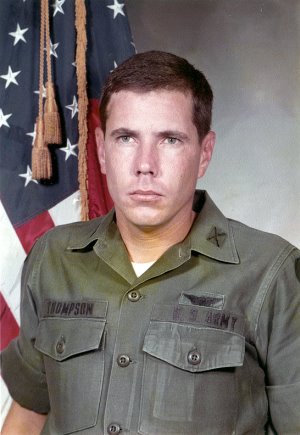
"The soldier, be he friend or foe, is charged with the protection of the weak and the unarmed."
- General Douglas MacArthur
09 January 2006
See You When I Git There
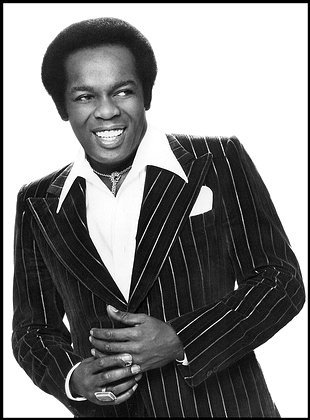 http://tinyurl.com/9uvrz
Pardon me, do you have change for a quarter?
I gotta make a phone call
Thank you
Oh, I hope this woman don't take me through no changes today
'Cause I've had a hard day today, man, you know
Let me see what's happenin' at the address 'fore I go home
How you doin', I hope you're fine
Did your day take you through changes and mess up your mind
I just called to say that I'm on my way
Whoa, and I'll see you when I get there
I hope you're in a good mood
You know a man's home is his castle, and I'm comin' home to groove
Whoa, and I'll see you when I get there
I'll see you when I get there
And you'll be ready for good lovin'
You'll be ready for good lovin'
'Cause I've worked hard all day
Now I'm comin' home to be with the one I love
Candlelight, cold wine, soft music on the radio
And you got everything you need from the store
'Cause I'll be in for the evening and I don't wanna come out no more
Whoa, and I'll see you when I get there
I'll see you when I get there
And you'll be ready for good lovin'
You'll be ready for good lovin'
'Cause I've worked hard all day
Now I'm comin' home to lay and relax my mind
Whoa, I'll see you when I get there
I'll see you when I, see you when I get there, baby
(I'll see you when I get there) I'll see you when I get there
(I'll see you when I get there) I'll see you when I get there, baby
(I'll see you when I get there) See you when I get there
(I'll see you when I get there) See you when I get there, baby
Whoa, I'll see you when I get there
I'll see you when I get there
And you'll be ready for good lovin'
You'll be ready for good lovin'
'Cause I've worked hard all day
Now I'm comin' home to lay and relax my mind
Whoa, I'll see you when I get there
I said I'll see you when I get there, baby
I said I'll see you when I get there
I said I'll see you when I get there, baby
I said I might have to run all the way
Because the bus might be slow today
I've been thinkin' about you all day long
And I just can't wait to get home
I'll see you when I get there
I'll see you when I get there, baby
(You'll be ready) I've been workin' hard all day, you've been on my mind
(You'll be ready) I can't go on without you, darling, by my side
(I'll see you when I get there) I'll see you when I get there
(I'll see you when I get there)
(I'll see you when I get there) I'll see you when I get there, baby
My sincere thanks to London Lee
16 December 2005

12 December 2005
Everyone carries around his own monsters
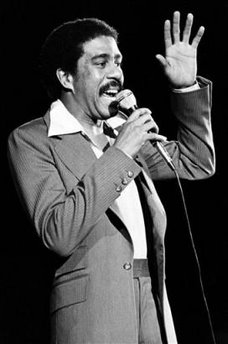
I'd like to make you laugh for about ten minutes though I'm gonna be on for an hour.
[as a TV preacher] People are always asking me, "Reverend; if you need money so bad, why don't you sell one of your houses, or cars or get rid of some of that jewelry?" And I always reply, "Are you crazy!" [looks at the phone bank]
When I was a kid, I always said I'd be in the movies one day, and damned if I didn't make it! Sometimes I just sit home and look out the window and say, "Daaaaaammmm!"
How much money have we raised so far? None! OK, this is a message for all you white people out there. Part of the money we raise tonight will go to the Back to Africa movement and...[every phone rings]
I had some great things and I had some bad things. The best and the worst... In other words, I had a life.

The idea of "laughing to keep from crying" was central to his work and has been diligently avoided by those who claim to owe so much to him.
As he revealed in his last performance films, Pryor understood the prison he had built for himself and the shallow definitions that smothered his audience's understanding of the humanity behind his work.
But, as they say, once the barn door has been opened, you cannot get all of the animals to return by whistling. So we need to understand the terrible mistakes this man of comic genius made and never settle for a standard that is less than what he did at his very best, which was as good as it has ever gotten. Stanley Crouch
I wish that every new and young comedian would understand what Richard was about and not confuse his genius with his language usage. Bill Cosby.
05 December 2005
Amusement-Verse
From The Wordsworth Dictionary of Foreign Words in English by John Ayto: A haiku is a Japanese poem consisting of only three lines, containing respectively five, seven, and five syllables. The genre appeared in the 16th century, and was popularized by the poet Basho in the 17th century. Spare to the point of starkness, haiku traditionally take an image from the natural world (eg the flight of a crane) and leave it suspended in the mind, like a raindrop at the tip of a leaf, so that its subtle allusions may work on the imagination. The Japanese term haiku is a compound, formed from hai 'amusement' and ku 'sentence, verse'.
It is first recorded in English at the end of the 19th century. A hokku was originally the opening half-line of a linked series of haiku, but the term is now used synonymously with haiku. Haiku should not be confused with tanka, which denotes a five-line Japanese poem of five, seven, five, seven, and five syllables respectively (it is a compound of Japanese tan 'short' and ka 'song').
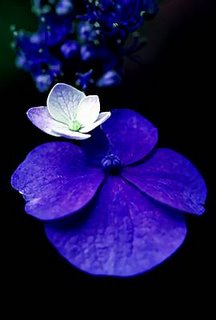
Ajisai (hydrangea) Nara, Lee Dobson
An autumn wind
More white
Than the rocks in the rocky mountain.
old pond . . .
a frog leaps in
water's sound
-- Matsuo Bashö (1644-1694)
It is first recorded in English at the end of the 19th century. A hokku was originally the opening half-line of a linked series of haiku, but the term is now used synonymously with haiku. Haiku should not be confused with tanka, which denotes a five-line Japanese poem of five, seven, five, seven, and five syllables respectively (it is a compound of Japanese tan 'short' and ka 'song').

An autumn wind
More white
Than the rocks in the rocky mountain.
old pond . . .
a frog leaps in
water's sound
-- Matsuo Bashö (1644-1694)
Subscribe to:
Posts (Atom)