11 January 2006

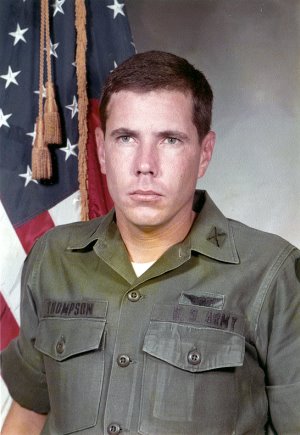
If all men were just, there would be no need of valor

“Real valor consists not in being insensible to danger; but in being prompt to confront and disarm it.”
- Sir Walter Scott


"The soldier, be he friend or foe, is charged with the protection of the weak and the unarmed."
- General Douglas MacArthur
09 January 2006

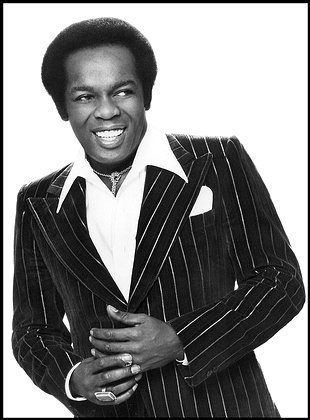
See You When I Git There

http://tinyurl.com/9uvrz

Pardon me, do you have change for a quarter?
I gotta make a phone call
Thank you
Oh, I hope this woman don't take me through no changes today
'Cause I've had a hard day today, man, you know
Let me see what's happenin' at the address 'fore I go home

How you doin', I hope you're fine
Did your day take you through changes and mess up your mind
I just called to say that I'm on my way
Whoa, and I'll see you when I get there

I hope you're in a good mood
You know a man's home is his castle, and I'm comin' home to groove
Whoa, and I'll see you when I get there
I'll see you when I get there

And you'll be ready for good lovin'
You'll be ready for good lovin'
'Cause I've worked hard all day
Now I'm comin' home to be with the one I love

Candlelight, cold wine, soft music on the radio
And you got everything you need from the store
'Cause I'll be in for the evening and I don't wanna come out no more
Whoa, and I'll see you when I get there
I'll see you when I get there

And you'll be ready for good lovin'
You'll be ready for good lovin'
'Cause I've worked hard all day
Now I'm comin' home to lay and relax my mind

Whoa, I'll see you when I get there
I'll see you when I, see you when I get there, baby
(I'll see you when I get there) I'll see you when I get there
(I'll see you when I get there) I'll see you when I get there, baby
(I'll see you when I get there) See you when I get there
(I'll see you when I get there) See you when I get there, baby

Whoa, I'll see you when I get there
I'll see you when I get there

And you'll be ready for good lovin'
You'll be ready for good lovin'
'Cause I've worked hard all day
Now I'm comin' home to lay and relax my mind

Whoa, I'll see you when I get there
I said I'll see you when I get there, baby
I said I'll see you when I get there
I said I'll see you when I get there, baby

I said I might have to run all the way
Because the bus might be slow today
I've been thinkin' about you all day long
And I just can't wait to get home

I'll see you when I get there
I'll see you when I get there, baby
(You'll be ready) I've been workin' hard all day, you've been on my mind
(You'll be ready) I can't go on without you, darling, by my side
(I'll see you when I get there) I'll see you when I get there
(I'll see you when I get there)
(I'll see you when I get there) I'll see you when I get there, baby


My sincere thanks to London Lee

12 December 2005

Everyone carries around his own monsters

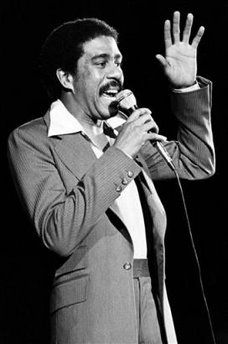
I'd like to make you laugh for about ten minutes though I'm gonna be on for an hour.

[as a TV preacher] People are always asking me, "Reverend; if you need money so bad, why don't you sell one of your houses, or cars or get rid of some of that jewelry?" And I always reply, "Are you crazy!" [looks at the phone bank]

When I was a kid, I always said I'd be in the movies one day, and damned if I didn't make it! Sometimes I just sit home and look out the window and say, "Daaaaaammmm!"

How much money have we raised so far? None! OK, this is a message for all you white people out there. Part of the money we raise tonight will go to the Back to Africa movement and...[every phone rings]

I had some great things and I had some bad things. The best and the worst... In other words, I had a life.


The idea of "laughing to keep from crying" was central to his work and has been diligently avoided by those who claim to owe so much to him.

As he revealed in his last performance films, Pryor understood the prison he had built for himself and the shallow definitions that smothered his audience's understanding of the humanity behind his work.

But, as they say, once the barn door has been opened, you cannot get all of the animals to return by whistling. So we need to understand the terrible mistakes this man of comic genius made and never settle for a standard that is less than what he did at his very best, which was as good as it has ever gotten. Stanley Crouch


I wish that every new and young comedian would understand what Richard was about and not confuse his genius with his language usage. Bill Cosby.

05 December 2005

Amusement-Verse

From The Wordsworth Dictionary of Foreign Words in English by John Ayto: A haiku is a Japanese poem consisting of only three lines, containing respectively five, seven, and five syllables. The genre appeared in the 16th century, and was popularized by the poet Basho in the 17th century. Spare to the point of starkness, haiku traditionally take an image from the natural world (eg the flight of a crane) and leave it suspended in the mind, like a raindrop at the tip of a leaf, so that its subtle allusions may work on the imagination. The Japanese term haiku is a compound, formed from hai 'amusement' and ku 'sentence, verse'.

It is first recorded in English at the end of the 19th century. A hokku was originally the opening half-line of a linked series of haiku, but the term is now used synonymously with haiku. Haiku should not be confused with tanka, which denotes a five-line Japanese poem of five, seven, five, seven, and five syllables respectively (it is a compound of Japanese tan 'short' and ka 'song').


Ajisai (hydrangea) Nara, Lee Dobson


An autumn wind
More white
Than the rocks in the rocky mountain.

old pond . . .
a frog leaps in
water's sound

-- Matsuo Bashö (1644-1694)

29 November 2005

Soleil d'hiver

Il est midi: dans l'air limpide et transparent
La lumière se joue et châtoie et rayonne
Comme au ciel tropical et sur le sable errant
Des déserts enflammés que la soif aiguillonne.

Mais ici le rayon se heurte en frémissant
Au grand linceul glacé dont le sol s'environne
Et la neige, éployant son cristal monotone,
Le rejette aussitôt vers l'astre éblouissant.

Et le soleil de feu et la plaine de glace
Sont là, rivaux altiers se défiant en face,
Se pressant, s'étreignant, corps à corps enlacés;

Sans que l'effort constant lasse leur calme audace,
Sans que le flocon croffle à la flamme tenace,
Sans que le rayon cède et dise: « C'est assez ».

Louis Dantin